Choosing the equipment for your reception area is not just a matter of looks or immediate budget. For a medical practice, a pharmacy or a notary's office, the choice of digital signage vs TV in the waiting room (a consumer television or a professional digital signage system) directly affects how your patients perceive you and how smoothly you communicate.
Why choose digital signage over a regular TV in the waiting room?
Digital signage in a waiting room is a multimedia communication system that shows personalised content (practical information, health advice, weather, practice news) on screens managed remotely through a software interface. Unlike a standard television, which is limited to linear broadcast channels, digital signage turns the screen into a genuine tool for patient communication and for promoting your services.
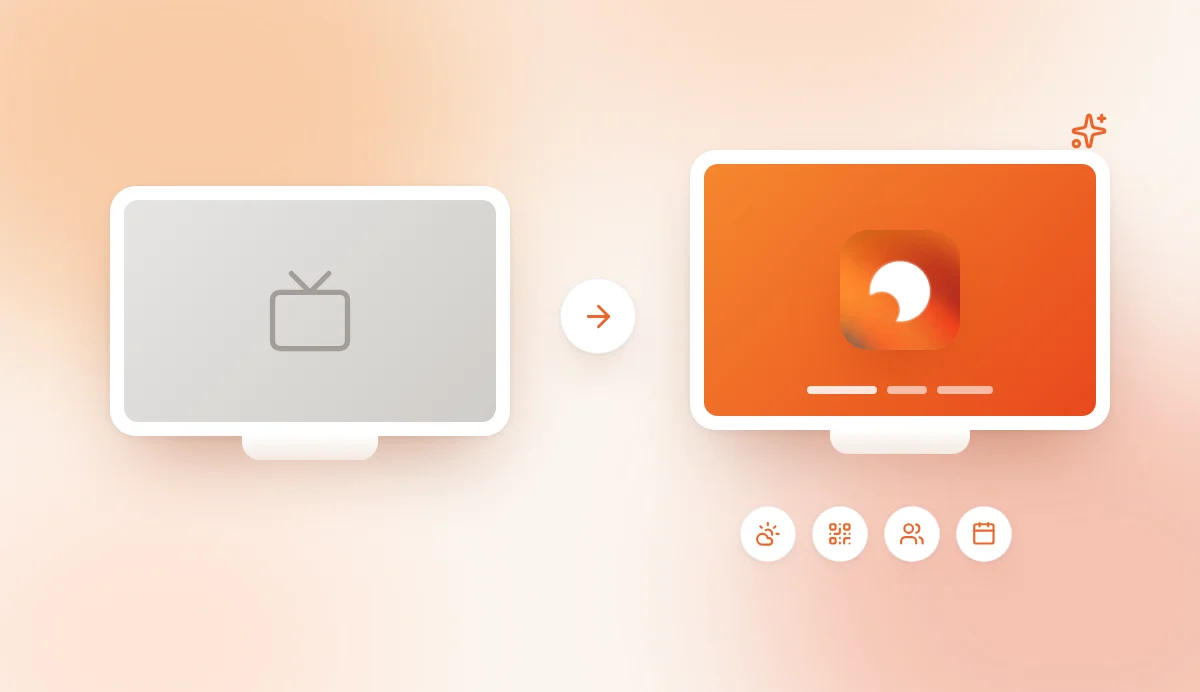
In 2026, the regular TV in a waiting room is showing its limits: uncontrolled content, competing adverts and, above all, an inability to actively reduce the anxiety of waiting. A solution like AtmoScreen, on the other hand, lets you take back full control of what your visitors see, while strengthening your brand image.
What is the real long-term cost of your screen?
The most common mistake is to compare only the initial purchase price. A consumer television can be bought for around €400, but its lifespan in professional use is limited. A home screen is not designed to run 10 to 12 hours a day without a break; the components overheat, and the panel loses brightness in under 24 months.
Here is a cost comparison over 5 years:
| Cost criterion | Regular television (consumer) | Digital signage (pro + AtmoScreen) |
|---|---|---|
| Hardware purchase | €350 to €500 | €600 to €900 (professional screen) |
| Subscription / software | €0 (free-to-air TV) | ~€20 / month (SaaS) |
| Maintenance & replacement | Replacement every 2-3 years | Lifespan of 7 years+ |
| Compliance (music rights, SACEM in France) | Public performance fee required | Often included or simplified |
| Estimated total cost (5 years) | ~€1,200 (including 2 replacements) | ~€1,800 (stable hardware + service) |
Although the initial investment is slightly higher for digital signage, the durability of professional hardware and the added value of the services included (automatic updates, technical support, content library) make it the more economical option over time.
How does digital signage reduce perceived waiting time?
Recent studies on the patient experience show that engaging, informative content can reduce perceived waiting time by more than 35%. A regular television playing a 24-hour news channel can paradoxically increase stress, especially when the news is distressing.
Digital signage lets you vary formats to hold attention without tiring people:
- Practical information: Hygiene reminders, opening hours, an introduction to the team.
- Educational content: Videos on dental prevention, nutrition tips or explanations of new treatments.
- Light entertainment: Local weather, a daily almanac or cultural anecdotes.
By offering useful content, you turn a passive wait into an opportunity for patient education. AtmoScreen also provides templates optimised for each sector, making this personalisation easy without any graphic design skills.
What are the legal obligations: music rights and GDPR?
Showing television in a public place (your waiting room) is not free. Broadcasting regular TV channels obliges you to pay a fee to SACEM (and sometimes SPRE), the French music rights bodies, which can run to several hundred euros a year depending on the size of your business.
In terms of GDPR, using a consumer connected TV (Smart TV) can raise privacy issues if the device collects data on viewing habits in your practice. A professional digital signage solution guarantees a secure environment:
- Full control: No patient data is collected by the screen.
- Broadcast rights: The content provided by AtmoScreen is designed to comply with current legislation.
- No imposed advertising: You show only what you have chosen, avoiding intrusive adverts for competing or inappropriate products.
Does digital signage offer a better return on investment (ROI)?
Unlike a regular TV, which is a pure cost centre, digital signage in a waiting room is a growth lever. For a pharmacist or a dentist, the screen becomes a silent salesperson.
- Promoting little-known services: Tell your patients about medication reviews, teleconsultation or cosmetic dental care. AtmoScreen users report a 15 to 20% increase in demand for the services featured on screen.
- Reducing the administrative load: By showing the documents patients need to prepare before the consultation, you free up time for the front desk.
- Showcasing expertise: A practice that communicates about its cutting-edge equipment or ongoing training builds trust among its patients.
According to 2025 field feedback, the ROI of a digital screen is generally reached in under 8 months thanks to the additional sale of services or parapharmacy products.
Should you give up regular television altogether?
There are a few rare cases where a regular television may be enough: for example, if you see fewer than 3 patients a day, or if your reception area is used only for very short waits (under 2 minutes). However, as soon as waiting becomes a regular feature, the lack of control over content becomes a risk to your professional image.
A hybrid solution is often the best choice for those who hesitate: use a high-brightness professional screen and run the AtmoScreen software on it to alternate between information and controlled entertainment.
Frequently asked questions
What is a digital signage screen?
A digital signage screen is a professional monitor built for intensive use (often 16/7 or 24/7), driven by software that lets you show a personalised multimedia programme (images, videos, RSS feeds) to a specific audience, such as the patients of a medical practice.
Can I use my current television with AtmoScreen?
Yes, you can perfectly well use a standard television. You simply connect a small streaming device (player) or use your Smart TV's web browser to play the content loops you create in AtmoScreen. It is an excellent way to test the solution at low cost.
Is it complicated to update the content?
No, it is one of AtmoScreen's strengths. Everything is managed from your computer or smartphone through an intuitive dashboard. You can change a price, add a photo of the team or announce an exceptional closure in a few clicks, and the screen updates instantly.
Does digital signage work without an internet connection?
A connection is needed to update content or show live feeds (weather, news). However, if the internet goes down, most systems keep playing the last downloaded media in a loop, so no black screen ever appears in front of your customers.
Conclusion
The contest between a regular television and digital signage in the waiting room now clearly favours the latter. More than just a screen, digital signage is a partner in your daily communication. It showcases your expertise, reassures your patients and makes the most of a space often seen as a constraint.
By investing in a flexible, simple solution like AtmoScreen, you move from imposed broadcasting to communication that you choose: modern and effective.
Transform your waiting room today
Ready to offer your patients a modern experience while simplifying your communication?
- Discover how AtmoScreen works and create your first screen in under 5 minutes.
- See our prices and plans to find the right offer for your business.
- Do you have a specific project for several sites or a franchise? Contact our team.
- Or start your 7-day free trial, no credit card required.